AWASH NATIONAL PARK
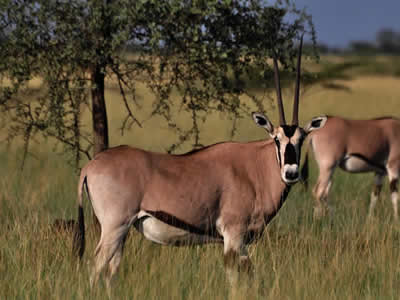 Awash National Park takes its name from the Awash River which marks the park’s southern boundary is located 225 km east of Addis Ababa, cover an area of 827 square kilometers (319 square miles) the Park stretches 30km east to west and a little less from north to south. The terrain is mainly acacia woodland and grassland. Lying in the lowlands east of Addis Ababa, and striding the National Park is one of the handpicked reserves in Ethiopia as it’s the most reachable national park in the country. The Awash River, one of the major rivers of the Horn of Africa, waters important agricultural lands in the north- eastern part of Ethiopia and eventually flows into the wilderness of Danakil Depression. The dramatic Awash Falls as the river tumbles into its gorge is the site not to be missed in the national park.
Awash National Park surrounding the dormant volcano of Fantale is one of the main features of the park on the southern flank of which can be seen the dark scar of the last lava flow of 1820 is a reserve of arid and semi-arid woodland and Savannah, with riverine forests along the Awash River. Forty-six species of animals have been identified here, including Beisa Oryx and Swayne's Hartebeest. The bird life is prolific especially along the river and in amongst the 392 species recorded. The other feature is the turquoise-blue pools of the natural hot springs in the extreme north of the park where you can enjoy swimming and bathing. Awash national park is one of the best ideal national park for those who are interested with nature, wild life and birding with limited schedule.
Bird life over 350 species are recorded for the park: They range from the great ostrich, frequently and easily observed, and the less common Secretary Bird and Abyssinian Ground Hornbill, to the flashes of brilliant pink which are the Carmine Bee-eaters, and the Abyssinian Roller with turquoise and purple, wings, between these two extremes, birds of the riverine forest, Coucal, Turaco, Go-away Birds; birds of prey; and birds of the savannah to the north at Filwoha lies the hot springs oasis in its groves of palm trees. The Awash River gorge in the south of the park has some spectacular waterfalls near the park headquarters.
ABIYATA SHALLA NATIONAL PARK
Abiyatta Shalla Lakes National Parks in the Great Rift Valley, only 200 kilometers (124 miles) south of Addis Ababa, and in the Lake Langano recreational areas, the Abiyatta Shalla lakes national Park attracts numerous visitors. It was created primarily for its aquatic bird life, particularly those that feed and breed on lakes Abiyatta and Shalla in Large numbers. Flamingoes can be seen scattered over most of its surface, and especially along the windward edge where their algal food source concentrates. While attention is focused on the water birds, the land area does contain a reasonable amount of other wildlife. From here you can see other parts of Lake Abiyatta and some mammal species, especially Grantfs gazelle, warthog and occasionally the Oribi.
Chitu Lake Chitu Creator Lake is a part of or under Abiyatta-Shalla National Park which is not or rarely visited by tourist but have very large flock of Flamingo which makes the lake paradise for Flamingo and also because of less visitors. However, it needs to have half day to visit both lakes with Chitu Creator Lake if base in one Langano Resort. SENKALLE WILD LFIE SANCTUARY In association with the Abiyatta Shalla Lakes National Park is Senkelle Swaynefs hartebeest Sanctuary, some 70 kilometers (43 miles) from the town of Shashemene, and close to the Chike entrance of the park. The sanctuary was established for preservation of this endemic subspecies of the hartebeest (Alcelaphus buselaphus Swayne) which once roamed the plans of Somalia and Ethiopia in thousands, but is now restricted to four small localities in Ethiopia. The sanctuary is small but well worth a visit.
BALE MOUNTAIN NATIONAL PARK
Ethiopia's most important biodiversity hotspot, Bale Mountains National Park supports a rich mosaic of high-altitude habitats including lush evergreen forest, stands of giant bamboo, pastel-shaded moorland, and sheltered river valleys swathed in fragrant juniper-hagenia woodland. Nominated as a tentative UNESCO Natural World Heritage Site in 2009, the park is the most important stronghold to three endemic large mammal species - the charismatic Ethiopian wolf, handsome mountain Nyala and delightful Bale monkey - while its incredible avifauna is reflected by the African Birding Club having listed it as one of the continent’s top five birding hotspots. The national park is an area of high altitude plateau that is broken by numerous spectacular volcanic plugs and peaks, beautiful alpine lakes and rushing mountain streams that descend into deep rocky gorges on their way to the lowlands below. As you ascend into the mountains you will experience changes in the vegetation with altitude, from juniper forests to heather moorlands and alpine meadows, which at various times of year exhibit an abundance of colorful wildflowers. Bale Mountains National Park is the largest area of Afro-Alpine habitat in the whole of the continent. It gives the visitor opportunities for unsurpassed mountain walking, horse trekking, scenic driving and the chances to view many of Ethiopia's endemic mammals, in particular the Mountain Nyala and Ethiopian Wolf, and birds, such as the Thick-billed Raven, Wattled Ibis, Blue-winged Goose, White backed Black Tit, White Collard Pigeon and Rouget's Rail. The climate of the Bale Mountains, as is to be expected in a high altitude mountainous region, is characterized by a high rainfall and periods of damp cloudy weather, interspersed with periods of sparkling sunny weather with brilliant blue skies.
The climatic year can be roughly divided into three seasons -the dry, early wet and wet seasons. The dry season is the best period to visit the National Park usually from November to February, especially for walking and horse trekking in the high mountain area. The vegetation can get very dry in the dry season, and fires must then be very carefully tended. The Mountains are most famous as home and refuge of the endemic Mountain Nyala and Ethiopian Wolf. Both these mammals occur in reasonable numbers, and visits to the Gaysay area, and the Sanetti plateau will ensure you see both. The Mountain Nyala is a large antelope in the spiral-horned antelope family, this large spiral-horned antelope most often seen on the short walking trail that runs through the juniper-hagenia forest around the park headquarters at Dinsho. Other mammals often encountered at Dinsho include warthog, Bohor reedbuck and the endemic Menelik’s bushbuck.
Bale’s high-altitude centerpiece is the Sanetti Plateau, a vast lava plateau interspersed with several 4,200-plus meter volcanic cones. Sanetti is the world’s most extensive Afro-Alpine moorland, comprising tussocks of heather interspersed with icy tarns and ethereal giant lobelias. The northern slopes below Sanetti support a mix of juniper-hagenia woodland and Afromontane grassland, while the southern slopes are layered with altitudinal bands of Erica, bamboo and Afromontane forest. Bale's 1,300-plus plant species include 160 Ethiopian endemics and 23 unique to the park.
Bale is the main global stronghold for the endangered Ethiopian wolf, a handsome red-and-white canid often seen trotting through the heather of the Sanetti Plateau, where it feeds on rodents such as the endemic giant mole-rat. The Harenna Forest south of Sanetti supports the park’s richest variety of large mammals, these include the remarkable giant forest hog (the world’s largest swine) and the much localized Bale monkey, a vulnerable endemic whose tiny range is attributable to its specialised diet of bamboo.
Bale stands out as the best place in Ethiopia to see endemic birds. Six national endemics are present, alongside another 11 species shared only with Eritrea, and several others unique to the Horn of Africa. Juniper-hagenia forest around Dinsho hosts woodland species such as white-cheeked turaco, yellow-fronted parrot, black-winged lovebird, and Abyssinian catbird, while high-altitude specialties on Sanetti include Rouget’s rail, chestnut-naped francolin, spot-breasted plover and alpine chat. Bale supports the only known sub-Saharan breeding populations of golden eagle, ruddy shelduck and red-billed chough, underscoring the Palaearctic affiliations of Ethiopia’s wildlife.
Bale is a superb destination for hiking and mule back treks. A good starting point for walkers is the undemanding trail around Dinsho, or the half-day Bamboo and Waterfall Trail in the Harenna Forest. Longer trails out of Dinsho, mostly above the 3,000m contour, take from two to eleven days. It can be explore by vehicle, with all-weather roads offering access to most of its more alluring habitats - indeed all-weather road across the Sanetti Plateau to the 4,377m peak of Mount Tulu Dimtu is the highest in Africa.
CHEBERA-CHURCHURA NATIONAL PARK
One of the western highland’s most underrated gems, hilly Chebera-Churchura extends across 1,215km2 of well-watered jungle and savanna. This is the most reliable place in Ethiopia to see elephants, which can be tracked on foot through the swampy Maka Forest with the help of experienced scouts. Bush pig and giant forest hog are also regularly observed in the forest, while other more secretive wildlife includes buffalo, lion, leopard and various antelope. Walking trails lead to four lily-covered crater lakes with abundant hippos, while a lovely campsite on the forested Shoshuma River supports white-cheeked turaco, silvery-cheeked hornbill, half-collared kingfisher, double toothed barbet and plenty of monkeys. Other attractions include a number of hot springs, and the twin waterfalls on the Bardo River.
GAMBELA NATIONAL PARK
Located about 600 kilometers from Addis Ababa on the river Baro, Gambela gives access to the Gambela National Park. The undulating plains of high Sudanese grass offer excellent opportunities for wilderness exploration. It is not particularly easy to access however in the river are to be found huge Nile perch, up to 100 kilograms, crocodiles and hippos. Other wildlife includes buffalo, giraffe, waterbuck, Roan antelope, Zebra, bushbuck, Abyssinian reedbuck, warthog, hartebeest, hyena, lion and elephant. Unfortunately, there are very few animals to be seen in the park, but the birds are many and varied, the olive baboon and the local race of the vervet, with its white whiskers, are the very common, as is the black and white colobus monkey.
MAGO NATIONAL PARK
Mago National Park is in South Omo Zone, 35 km south-west of Jinka, the administrative centre of the Zone. The park lies to the north of a large 90? Bend in the Omo River. To the west is the Tama Wildlife Reserve, with the Tama River forming the boundary? South of the Omo river is the Murulle Controlled Hunting Area, with an important wetland Lake Dip beside the river. The Mago River flows through the centre of the park and joins the Neri river at Mago swamp, before continuing southwards to join the Omo River. Areas along the lower Omo (within the park) are populated with a rich diversity of ethnic groups including the Ari, Banna, Bongoso, Hamar, Karo, Muguji, Male, Surma and Mursi peoples. A number of these groups live beside the river and make extensive use of its natural resources and basically depend on cattle- Nomado-pasturalist.
NACHISAR NATIONAL PARK
Nachisar National Park is in eastern North Omo Zone. The zonal capital, Arba Minch, is on the western border of the park. Arba Minch is 510 km south of the capital Addis Ababa and 279 km south-west of the regional capital Hawassa. Nechisar is named after the white grass that covers the undulating Nechisar plains and contrasts with the black basalt rocks of the Amaro Mountains to the east, and the black soils of the plains. Around 15% of the park comprises portions of Lakes Abaya to the north and Chamo to the south. The water of Lake Abaya is always brown or red-brown due to iron-ferric, in contrast with Lake Chamo which has strikingly blue water and white sandy beaches. The park also covers the neck of land between the lakes which supports groundwater forest. At the foot of Mt Tabala in the south-east there are hot springs. Both lakes have good populations of fish, including Nile perch, and there is a small, modern fishing industry. Crocodiles thrive in Lake Chamo and are being culled commercially for their highly prized skins.
OMO NATIONAL PARK
Omo National Park, the largest in the country, with an area of 4,068 square kilometers, It is a vast expanse of true wilderness, adjacent to the Omo River, which flows southwards into Lake Turkana and is one of the richest and least-visited wildlife sanctuaries in eastern Africa. Eland, Oryx, Burchell's zebra, Lelwel hartebeest, buffalo, giraffe, elephant, waterbuck, kudu, lion, leopard and cheetah roam within the park's boundaries. The Omo Valley is virtually free of human habitation but is rich in paleo-anthro-pological remains. According to scientific research done in 1982 by the University of California at Berkeley, hominid remains from the Omo Valley probably date back more than four million years.
The Omo River, which is 760 km long, originates in the central, south-western highlands of Ethiopia, where it is known as the Gibe. Its final destination is Lake Turkana, close to the Kenyan border. Since 1973, the river has proved a major attraction for white-water rafters. The season for rafting is between September and October, when the river is still high from the June to September rains from high land but the weather is drier around Omo.
The river passes varied scenery, including an open gallery forest of tamarinds and figs, alive with colobus monkeys. Under the canopy along the riverbanks may be seen many colorful birds. Goliath herons, blue-breasted kingfishers, white-cheeked Turaco, emerald-spotted wood doves and red-fronted bee-eaters are all rewarding sights, while monitor lizards may be glimpsed scuttling into the undergrowth. Beyond the forest, hippos graze on the savannah slopes against the mountain walls, and waterbuck, bushbuck and Abyssinian ground hornbills are sometimes to be seen.
YANGUDI RASSA NATIONAL PARK
This little developed National Park covers an area of 4,730 square kilometers. Situated in a semi-desert area the Yangudi-Rassa National Park has very little rainfalls. With an altitude of 400 to 1,459 meters (1,300 - 4,800 feet) above sea level, the Park was established for the purpose of protecting an endangered species - the wild ass. Gerenuk, Soemmerringfs gazelle, Beisa Oryx, Grevy's Zebra and Hamadryas baboon are also found in the Park.
SIEMEN MOUNTAIN NATIONAL PARK
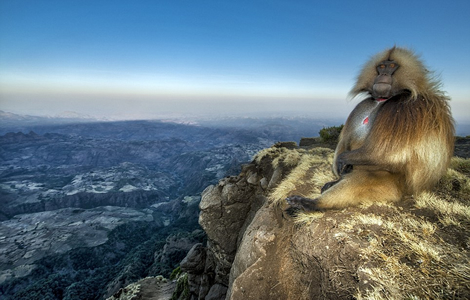 Ethiopia’s premier trekking and walking destination, the 412 km2 Simien Mountains National Park was inscribed as the only Natural World Heritage in Ethiopia in 1979, whereupon UNESCO lauded it as “one of the world’s most spectacular landscapes, with jagged mountain peaks deep valleys and sharp precipices dropping some 1,500m”. In addition to the splendid scenery and hiking opportunities, the Afromontane meadows and moorlands of the upper Simiens also form one of Ethiopia's most important biodiversity hotspots, populated by an alluring wealth of endemic plants and animals including Walia ibex, gelada baboon and Ethiopian wolf. The dramatic landscapes of the Simen Mountains (i.e. the extreme escarpments and their thousands of meters of sheer cliffs) are the result of massive seismic activity in the area about 40 million years ago (Miocene and Oligocene, geological period). Ever since, this massive complex (a 3000m-thick molten lava outpour) has been going through tectonic activities (faulting, folding ... during tertiary period), glaciations/ice cover and uplifting. Subsequently, erosion over the millennia has resulted in the rugged landscapes of the Semien Mountains (Hurni H., Ethiopia 1986). Climate The mean annual rainfall is 1,550mm falling in two wet seasons, from February to March, and July to September which is said to have become much lower since the 1960s (Margin, 2001). Temperatures range from a minimum of -2.5‹C to 4‹C to a maximum of 11‹C to 18‹C. There are often drying winds during the day; frosts may occur at night, and snow sometimes settles on the summit of Ras Dashen. Flora Due to variation in altitude and topographical features, the vegetation in Semen Mountain is characterized by four different altitudinal belts; namely: Afro alpine moorland (3700-4400 MASL), Ericaceous moorland/sub alpine highland (2900- 3700 MASL), mountain forest belts (2000-3000 MASL), and savanna belt (below 2000mast).
The endemic giant lobelia rhynchopetalum and festuca gilbertiana, Giant heather, erica arbora, hypericum revolutum , hypericum quartinianum, Juniperus procera, Hygenia abyssinica, Olea chrysophylla, and Papanea simensis are dominant species, to name a few. Species which are traditionally recognized as having 'medicinal' value include: Hygenia abyssinica, giant lobelia, Synoglossumlanceolatum, or Giometricum, phytolaca Dodicandra, Thymus serrulatus, Myrsine Africana, Achyranthus aspera, Kalanchoe deficiens, Zehnaria scabro, Conium maculatum, Fauna Though the park is home for 32 mammals and 182 bird species, Semen is known more by the richness (high rate) of endemic than species diversity, as there are 11 endemic mammals and 6 endemic bird species, each accounting for 32.2% and 37.5% of the country's endemic mammals and bird species, respectively.
Simen is one of the parks that make the country 'center of endemic' in East Africa, next to Madagascar. The 4 endemic large mammals of the park, which account for 57% of the country's endemic large mammals, are: Wallia Ibex capra ibex Wallia with a population of 623 as of 2005 (endemic to Semen only), Ethiopian wolf canis simensis with a population of 78 as of 2005 , Gelada Baboon more than 4000, Minilik Bush buck - still questionable. Besides, the park is also home for other large mammal species, such as: Klipspringer, Leopard, and common jackal. In addition to large and small mammals there are also 6 endemic bird species in the SMNP, namely; Spot breasted plover, Abyssinian long claw, Abyssinian cat bird, Black headed siskin, Abyssinian woodpecker and Ankober Serine.
The best way to explore the Simien Mountains is on foot or mule back several overnight options are available. The 3-day trail connecting Sankaber, Gich, Imet Gogo and Ayna Meda is recommended to those whose main interest is endemic wildlife. For peak-baggers, the ascent to the summit of Ras Dejen could be undertaken as a 3-day hike from Chennek. For those with limited time, it is possible to drive east from Debark to Chennek along an all-weather road, and to exit the car for short walks.